

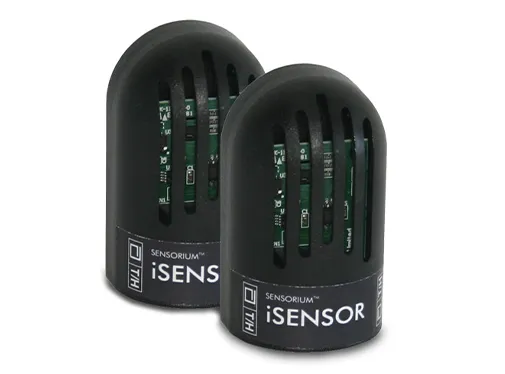
iSensor Temperature & Humidity Sensor
Monitoring Data Centre Temperature & Humidity
The iSensor Temperature and Humidity sensor integrates seamlessly with both the iSensor and iAccess Controllers.
Using standard CAT5/6 Ethernet cabling, the sensor connects directly to an available sensor port, enabling proactive and continuous environmental monitoring within data centres and server rooms.
Learn more about Temperature vs Humidity Monitoring by reading our article Temperature vs Humidity: Understanding Critical Environmental Metrics.
Product Overview
High-Precision Temperature & Humidity Monitoring for Data Centres
This sensor provides real-time temperature and humidity monitoring for crucial data centre spaces. It works directly with Advanced Datacentre Systems’ iSensor and iAccess controllers.
It instantly tracks temperature and humidity. This provides accurate, real-time data essential for critical management of server room environments.
Connect the sensors using standard CAT5/6 Ethernet cable. This simple connection allows flexible placement up to 500 meters away. You can deploy it easily throughout racks or across any room, thanks to a built-in magnet.
The sensor delivers proactive environmental data. It forms the foundation of a reliable DCIM (Data Centre Infrastructure Management) or BMS (Building Management System) strategy.
Why Monitor Temperature and Humidity?
Monitoring a data centre’s temperature and humidity is critical for reliability and cost management.
- Prevent Equipment Failure: High temperatures cause overheating, leading to component failure and system downtime.
- Maintain Performance: Optimal temperatures ensure servers run efficiently, preventing throttling and maintaining performance.
- Avoid Condensation (High Humidity): Excessive moisture can lead to condensation inside equipment, causing short circuits and corrosion.
- Prevent Static Electricity (Low Humidity): Very dry air increases the risk of electrostatic discharge (ESD), which can damage sensitive electronic components.
- Save Energy: Precise monitoring allows you to adjust cooling systems accurately, reducing energy waste and cutting operational costs.
- Validate Compliance: Tracking environmental conditions helps meet regulatory and warranty requirements for IT hardware.
iSensor Temperature/Humidity Sensor Key Advantages
The use of sensors to monitor data centre temperature and humidity is important. iSensor Temperature/Humidity sensor provides:
- Proactive Monitoring: Track both temperature and humidity continuously to detect early signs of overheating, moisture build-up, or environmental changes.
- Long Reach Cabling: Thanks to the 500m maximum cable length, you can deploy the sensor far from controllers, reducing the need for complex wiring or repeaters.
- Flexible Mounting: Each sensor has an internal magnet, making it easy to attach to rack infrastructure without additional brackets or fixtures.
- Seamless Controller Compatibility: Works out-of-the-box with both iSensor and iAccess controllers, so you don’t need separate sensor types.
- Integration Friendly: Readings can be accessed via the controller’s internal web server or integrated into SNMP-based NMS / BMS / DCIM systems.
How to Install & Integrate
These sensors are easy to install and integrate:
- Connection: Plug into any free sensor port on an iSensor or iAccess controller using standard CAT5/6 Ethernet cable.
- Cable Considerations: The sensor supports a maximum cable length of up to 500 meters, giving you flexibility to position it where it is most effective.
- Mounting: Use the built-in magnet to affix the sensor to rack frames or other steel infrastructure without additional hardware.
- Monitoring: Once connected, the controller handles data sampling and makes readings available via its internal web server or via SNMP for integration into third-party systems.
- Alarm Configuration: You can set high/low thresholds on the iSensor or iAccess controller for both temperature and humidity, enabling email/SNMP-based alerts when environmental conditions move outside acceptable ranges.
Reliability & Maintenance Guidelines
- Long-Term Stability: The sensor’s humidity reading stability is rated at 0.5% RH per year, meaning you can expect stable performance over long periods.
- Calibration: Depending on your compliance or SLA requirements, periodic calibration may be necessary — check your internal procedures or contact us for support.
- Physical Checks: Because it’s mounted via a magnet, it is easy to remove, inspect, clean, or reposition during maintenance windows.
- Redundancy: For highly critical environments, consider deploying multiple sensors in the same zone to provide backup readings and cross-verification.
Typical Applications
Below are some typical applications that benefit from using temperature and humidity sensors:
- Data Centre Racks: Monitor hot spots and “micro-climates” in specific rack locations to prevent thermal issues.
- Server Rooms: Use multiple sensors across the room to track humidity gradients and temperature uniformity.
- Remote or Large Facilities: Because of the long cable reach, you can consolidate multiple sensors across a large site without excessive wiring cost.
- BMS / DCIM Integration: Send environmental data into a Building Management System or Data Centre Infrastructure Management platform using SNMP, enabling trending, alerting, and capacity planning.
- Redundant Monitoring: Use alongside other environmental sensors (e.g., particle or VFC sensors) to build a layered, resilient monitoring strategy.
Features & Benefits
- Monitor both Temperature and Humidity.
- Maximum sensor cable length is 500 meters.
- Each sensor comes with an internal magnet for easy mounting to the rack infrastructure.
- For further details on the iSensor and iAccess Controllers, please refer to the relevant data sheets.
Specification
Temperature
- Range: 0 to +123.8ºC (32 to +254.9°F)
- Response time: 5 to 30 seconds
- Accuracy: ±0.4 °C nominal
- Repeatability: ± 0.1 °C
- Resolution: 0.01 °C
Humidity
- Range: 0 to 100% Relative Humidity
- Response time: 8 Seconds in slow moving air @ 25 °C
- Stability: 0.5% RH per year
- Accuracy: ± 3.0% RH, 0-100% RH @ 25ºC
- Non-linearity: < 1% RH Typical
- Repeatability: ± 0.1% RH
- Resolution: 0.05 %RH
Frequently Asked Questions (FAQs)
What does a temperature and humidity sensor do?
A temperature and humidity sensor measures environmental conditions in real time, helping you monitor and maintain optimal conditions for IT equipment. These sensors provide alerts if conditions move outside safe thresholds, allowing you to act before damage occurs.
Why is temperature monitoring important in a data centre?
Servers generate significant heat during operation. If temperatures rise too high, it can lead to overheating, hardware failure, and costly downtime. Maintaining proper temperature levels helps ensure reliable performance and extends equipment lifespan.
Why is humidity monitoring important?
Humidity levels must be carefully controlled because both high and low levels can cause problems:
- Low humidity can lead to electrostatic discharge (ESD), which can damage sensitive electronics
- High humidity can cause condensation, corrosion, and component failure
Monitoring humidity ensures a balanced environment that protects your infrastructure.
What are the recommended temperature and humidity levels for a data centre?
Industry guidelines (such as ASHRAE) recommend:
- Temperature: 18°C to 27°C
- Relative Humidity: 20% to 80%
Operating within these ranges helps minimise equipment failure and maintain reliability.
What happens if temperature or humidity is not controlled?
Poor environmental control can lead to:
- Equipment overheating or shutdown
- Increased risk of corrosion or moisture damage
- Static electricity damage
- Reduced hardware lifespan
- Unexpected downtime and data loss
Even small fluctuations can impact performance if left unchecked.
Where should temperature and humidity sensors be installed?
Sensors should be placed in key areas such as:
- Front (cold aisle) and rear (hot aisle) of server racks
- Air intake points
- High-density equipment zones
- Ceiling and floor levels for airflow monitoring
Strategic placement ensures accurate readings across the environment.
How often should environmental conditions be monitored?
Continuous, real-time monitoring is recommended. Data centres operate 24/7, so even short periods of incorrect temperature or humidity can cause damage. Automated alerts allow for immediate response.
Can temperature and humidity monitoring reduce energy costs?
Yes. Monitoring allows you to optimise cooling systems and avoid overcooling. Cooling infrastructure can account for a significant portion of energy use, so maintaining efficient conditions can reduce operational costs.
Do small server rooms also need monitoring?
Absolutely. Even small server rooms or network closets can experience temperature spikes or humidity issues. Monitoring helps prevent unexpected failures and ensures business continuity regardless of size.
How does the iSensor help protect my infrastructure?
The iSensor provides accurate, real-time environmental monitoring, helping you:
- Detect issues early
- Maintain compliance with industry standards
- Prevent costly downtime
- Extend the life of your IT equipment
Why is environmental monitoring critical for modern data centres?
Modern IT environments are more dense and heat-intensive than ever. Maintaining proper temperature and humidity is essential not only for preventing failures, but also for improving efficiency, reducing energy consumption, and ensuring long-term reliability.
Get in touch today
To discover more about temperature and humidity monitoring, or to discuss a requirement please contact us.