

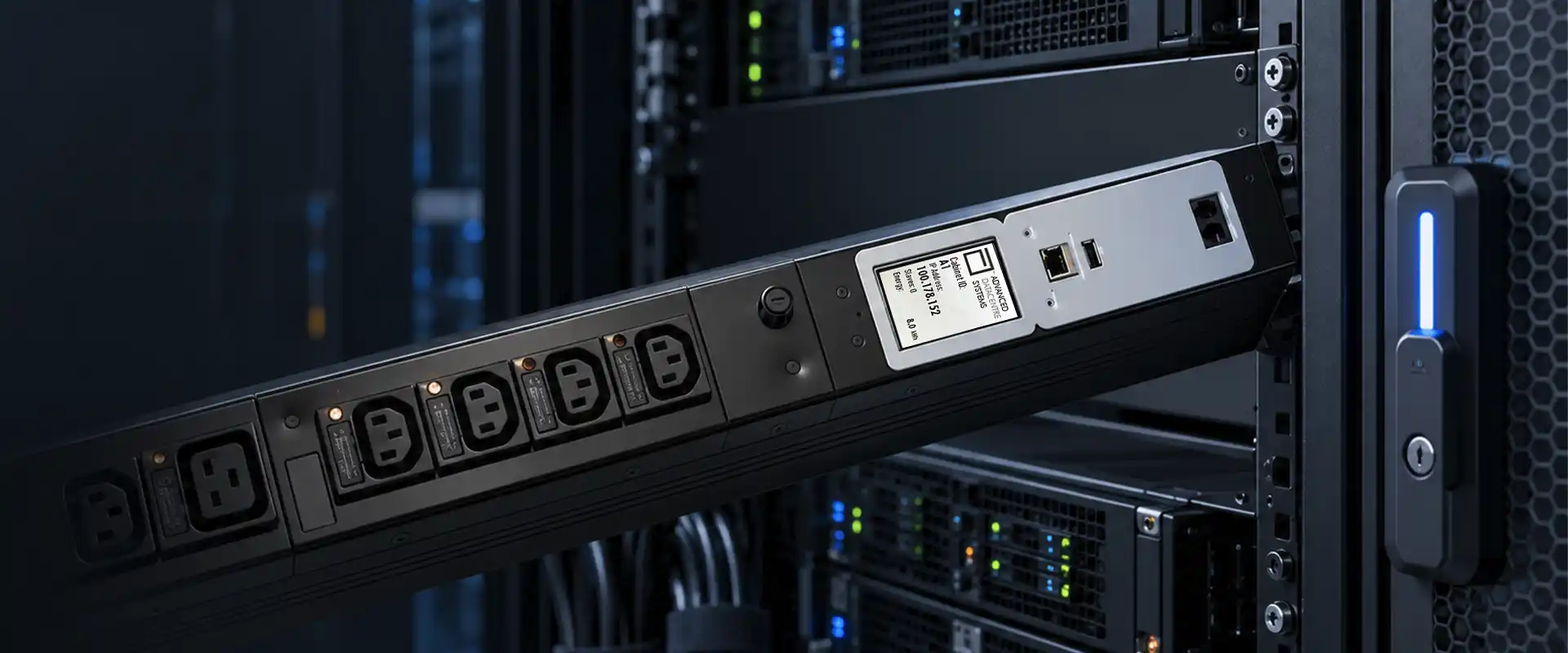
Managing power in modern data centres is becoming increasingly complex. As infrastructure grows, operators need better visibility and control over how equipment uses energy.
Remote power management helps meet these demands. It allows operators to monitor electrical loads and, where supported, control power outlets without visiting the equipment.
As a result, organisations can respond more quickly to problems, reduce unnecessary site visits and improve operational efficiency.
However, remote control also introduces risks. Without appropriate safeguards, accidental switching or unauthorised access could disrupt critical services.
So, what are the benefits of remote power management? What risks should operators consider, and how can they protect their infrastructure?
What Is Remote Power Management?
Remote power management allows operators to monitor and control electrical power infrastructure from a central or remote location.
In data centres, intelligent Power Distribution Units (iPDUs) commonly provide these capabilities. They monitor electrical loads and communicate power consumption data over a network.
However, not every intelligent PDU offers the same level of functionality.
There are three main capabilities:
- Overall power monitoring: Measures power consumption across an entire PDU.
- Per-outlet monitoring: Provides consumption data for individual connected devices.
- Remote outlet switching: Allows authorised operators to switch individual outlets on or off, including power cycling equipment.
Therefore, organisations should select intelligent PDUs based on their monitoring and control requirements. For example, an operator may only need consumption data for capacity planning. However, a remote site might also benefit from outlet switching to restart equipment without sending an engineer.
The Benefits of Remote Power Management
Remote power management offers several benefits, particularly for organisations managing large or geographically distributed facilities.
1. Faster Response to Equipment Problems
When equipment becomes unresponsive, restarting it may help restore normal operation. Traditionally, this could require an engineer to visit the rack and manually disconnect the power.
However, switched intelligent PDUs offer an alternative. An authorised operator can remotely power cycle an individual outlet without visiting the equipment.
As a result, organisations can reduce response times and avoid unnecessary site visits.
Nevertheless, operators should always verify the equipment before initiating a restart. Switching the wrong outlet could interrupt other services or create additional problems.
2. Improved Operational Efficiency
Routine power checks can consume valuable time, especially across multiple facilities. Remote monitoring allows operators to review electrical loads and investigate unusual power consumption from a central location.
Consequently, teams can spend less time conducting manual inspections and more time resolving operational issues.
This approach is particularly useful for remote and edge locations, where engineers may not always be available on-site.
3. Greater Visibility of Power Consumption
Understanding how equipment uses electricity is essential for effective infrastructure management. Intelligent PDUs provide consumption data that helps operators identify changes in electrical demand.
For example, per-outlet monitoring can reveal:
- Equipment consuming more power than expected.
- Changes in demand following upgrades or maintenance.
- Underutilised devices that continue to consume electricity.
- Electrical loads approaching defined operating limits.
With this information, operators can make more informed decisions about capacity, equipment deployment and energy use.
Furthermore, historical consumption data can help identify trends that might otherwise go unnoticed.
4. Reduced Need for Physical Intervention
Every unnecessary visit to a rack takes time and can introduce operational risks. For example, engineers working inside cabinets may accidentally disturb cables or neighbouring equipment.
Remote management reduces the need for routine physical intervention. Instead, operators can perform many monitoring and control tasks through a network connection.
This helps organisations improve efficiency while reserving physical access for essential maintenance.
The Risks of Remote Power Management
Although remote power management offers clear advantages, organisations must also consider the risks. After all, the ability to control electrical power remotely creates responsibilities as well as opportunities.
Unauthorised Remote Access
Remote outlet switching gives operators direct control over connected equipment. However, unauthorised access to these functions could disrupt critical services.
Importantly, not everyone who needs to monitor power consumption should have permission to switch outlets. Therefore, organisations should restrict switching permissions to approved personnel.
They should also use secure management connections and appropriate authentication.
Accidental Power Interruption
Human error remains a significant operational risk. For example, an operator might select the wrong outlet or restart equipment without understanding its dependencies.
Even a brief interruption could affect applications or services. To reduce this risk, organisations should maintain accurate outlet records and establish clear switching procedures.
Additional authorisation may also be appropriate for critical systems.
Loss of Management Connectivity
Remote power management relies on network communication with the equipment. If the management network fails, operators may temporarily lose visibility or remote control.
However, losing management connectivity does not necessarily interrupt electricity to connected equipment. For this reason, organisations should consider management network resilience and maintain suitable local recovery procedures.
Physical Rack Security
Remote power management introduces another important consideration: physical access to equipment. An organisation might have strict controls over who can remotely switch an intelligent PDU outlet. However, what happens if someone can physically access the cabinet?
A person with rack access could potentially disconnect a power cable, interfere with equipment or make unauthorised changes.
These actions may bypass the procedures that govern remote power control.
Remote power management controls how authorised users manage electrical power. Rack access control helps protect who can physically interact with that equipment.
Therefore, organisations should consider both when developing their infrastructure security strategy.
Best Practices for Secure Remote Power Management
A structured approach helps organisations gain the benefits of remote power management while reducing operational risks.
The following practices provide a useful starting point.
1. Apply Role-Based Access Control
Not every operator needs the same level of access. For example, monitoring personnel may need to review electrical loads without requiring outlet switching permissions.
By assigning access according to responsibilities, organisations can reduce accidental and unauthorised changes.
2. Maintain Accurate Equipment Records
Operators must know which equipment connects to each power outlet. Clear identification reduces the risk of restarting the wrong device. It also helps teams understand the potential impact of switching actions.
This becomes particularly important for equipment with dual power supplies or dependencies on other systems.
3. Establish Remote Power Cycling Procedures
Remote switching offers convenience, but operators should not use it as the automatic response to every problem. Instead, organisations should establish procedures covering equipment identification, authorisation and dependency checks.
After a restart, operators should also verify that the equipment has returned to normal operation.
4. Monitor Power Conditions Continuously
Continuous monitoring helps operators identify changes in electrical consumption. For example, rising loads may indicate that a circuit is approaching its operating limit.
Furthermore, combining power information with environmental monitoring can provide additional insight into equipment conditions.
This wider view helps teams investigate problems and make better operational decisions.
5. Include Physical Rack Security
Remote access policies should also consider physical security. Electronic cabinet locks and rack-level access permissions help restrict who can reach critical equipment. In addition, access records provide useful information when investigating unusual activity.
Together, these measures strengthen accountability and support wider operational security procedures.
Bringing Power Management and Rack Security Together
Power monitoring provides valuable information. However, it does not always explain why an event occurred.
Consider a server that unexpectedly loses power. The PDU may show that consumption has fallen or that an outlet has changed state. However, operators still need to establish what caused the interruption.
Was the outlet switched remotely? Did an electrical fault occur? Or had someone physically accessed the rack?
Power data alone may not provide the answer.
By bringing together information from different infrastructure systems, operators gain a clearer picture of events.
For example:
- Power monitoring provides information about electrical loads and equipment consumption.
- Rack access control records who accessed a cabinet and when.
- Environmental monitoring provides information about conditions that may affect equipment performance.
Together, these sources provide valuable context during incident investigations. Although this information may not identify the cause automatically, it can help operators understand the sequence of events and make more informed decisions.
How ADS Solutions Support Remote Power Management
At Advanced Datacentre Systems, we believe effective infrastructure management requires visibility beyond individual devices. Our solutions help organisations monitor power, manage physical rack security and understand conditions across their infrastructure.
- ADS ACU Intelligent PDUs provide several levels of power monitoring and control. Depending on the model, these include overall metering, individual outlet monitoring and remote switching.
- iAccess Rack Access Control manages physical access to individual server cabinets. It also records access activity, helping organisations maintain accountability for critical equipment.
- Sensorium™ brings information from different infrastructure systems together within a single management platform.
For example, Sensorium™ can combine PDU monitoring information with iAccess rack security events and environmental data.
As a result, operators gain wider visibility of their infrastructure without relying on separate systems to investigate every event.
This integrated approach helps organisations identify potential problems, investigate incidents and make more informed operational decisions.
Conclusion
Remote power management plays an important role in modern data centre operations. It helps organisations monitor consumption, respond to equipment problems and reduce unnecessary site visits.
However, remote control also requires appropriate safeguards. Secure access permissions, accurate equipment records and clear operating procedures all help reduce risk. Equally, organisations must consider the physical security of the cabinets containing their critical equipment.
By combining power monitoring, rack access information and environmental data, operators can gain a more complete understanding of their infrastructure.
Remote power management provides greater control. Combining that control with visibility and physical security provides greater confidence.
Discover how Sensorium™ brings power, environmental and rack security information together within a single infrastructure management platform.
Frequently Asked Questions
Remote power management allows operators to monitor and, where supported, control electrical power infrastructure without being physically present. Intelligent PDUs commonly provide these functions, including power monitoring and remote outlet switching.
No. Some intelligent PDUs provide overall power monitoring, while others offer individual outlet monitoring. Remote power cycling requires a PDU with switched outlet functionality.
Common risks include unauthorised switching, accidental power interruption and compromised management access. In addition, physical access to equipment can create security risks. Therefore, organisations should consider both remote permissions and rack-level security.
DCIM software, such as Sensorium™, can combine power monitoring with other infrastructure information, including environmental conditions and rack access events. As a result, operators gain better visibility and additional context when investigating incidents.