

The Complete Guide to DCIM Software & Infrastructure Management
Mastering Efficiency: How to Choose and Implement the Right DCIM Software for Modern Infrastructure
Data Centre Infrastructure Management (DCIM) software has become the operational backbone of modern data centres.
Today’s data centre facilities are rapidly evolving into complex, distributed, and power-intensive ecosystems. Consequently, relying on outdated spreadsheets, siloed monitoring tools, or manual walk-throughs to manage critical infrastructure is no longer sustainable. This fragmented approach creates dangerous blind spots, hinders efficiency, and escalates operational risk.
Enter Data Centre Infrastructure Management (DCIM). Rather than functioning as a loose collection of utilities, modern DCIM software acts as a holistic platform that unifies real-time visibility, asset intelligence, capacity planning, access control, and environmental monitoring. As a result, operators gain a single, unified view of their entire facility.

This in-depth guide explores what DCIM software is, why it is vital for modern operations, and how to evaluate the right solution. Ultimately, mastering DCIM equips you to optimise performance, mitigate risk, and control costs across your infrastructure.
In this article we will cover:
What is Data Centre Infrastructure Management (DCIM)?
Modern data centres are increasingly dense and resource-intensive. Consequently, achieving peak efficiency and uptime is no longer optional – it is an operational imperative. Data Centre Infrastructure Management (DCIM) bridges the traditional divide between Information Technology (IT) and facility management, unifying data from both spheres into one cohesive platform.
Traditionally, data centre operations suffered from siloed management. IT teams focused independently on servers, storage arrays, and network devices, whilst facilities teams separately managed cooling units, power distribution, and environmental controls. Unfortunately, this disconnect frequently caused communication breakdowns, stranded capacity, and missed opportunities for energy savings.
However, DCIM fundamentally reshapes this workflow. By continuously monitoring, measuring, and managing physical and logical infrastructure together, DCIM gives teams the clarity needed to maximise uptime, reduce operating expenses (OpEx), and extend equipment lifespans.
The Three Core Pillars of DCIM Software
To deliver end-to-end operational control, a comprehensive DCIM platform operates across three interconnected pillars:
1. Comprehensive Monitoring and Real-Time Visibility
The foundational pillar of DCIM is continuous, granular telemetry. Think of it as a central nervous system for your facility, collecting live data from critical subsystems – including intelligent PDUs, UPS units, CRAC/CRAH cooling systems, rack access control, and environmental sensors. Because operators receive an instant snapshot of facility health, they can spot anomalies early and respond swiftly to physical or thermal threats.
2. Strategic Management and Operational Control
This live monitoring data fuels the second pillar: precise asset and capacity management. DCIM maintains a dynamic inventory of every asset—detailing rack location, power draw, network connectivity, and maintenance schedules. Furthermore, it streamlines change management by allowing teams to model the impact of moves, adds, and changes before execution. Crucially, DCIM provides accurate capacity planning across rack space, power, cooling, and ports, preventing both costly over-provisioning and risky capacity shortfalls.
3. Intelligent Optimisation and Predictive Analytics
The third pillar transforms raw telemetry into actionable intelligence. By analysing historical and real-time trends, DCIM identifies hidden inefficiencies and forecasts future resource demand. For example, it can expose “zombie servers”—machines drawing power and cooling while performing no useful work—so you can reclaim valuable capacity. Similarly, it highlights cooling imbalances and airflow issues, enabling targeted adjustments that lower energy consumption and carbon emissions.

Why DCIM is Critical in the Modern Data Centre
The era of “set it and forget it” facility management is over. Therefore, today’s operators face converging technical and commercial pressures that make automated DCIM essential for resilience and sustainability.
Extreme Rack Density Challenges
The rapid adoption of Artificial Intelligence (AI), Machine Learning (ML), and High-Performance Computing (HPC) requires packing far more compute power into smaller footprints. Consequently, high-density racks generate intense heat loads. As a result, without granular DCIM visibility, operators are effectively flying blind – risking localised hot spots, thermal throttling, or catastrophic hardware failures. In contrast, real-time monitoring of rack-level power and intake temperatures allows teams to fine-tune cooling dynamically.
Hybrid and Distributed Infrastructure
Modern enterprises rarely rely on a single on-premise server room. Instead, they manage a distributed mix of core facilities, colocation suites, and edge computing sites. As a result, overseeing geographically dispersed locations without a central platform leads to inconsistency and security gaps. DCIM solves this challenge by providing a true ‘single pane of glass’, ensuring uniform visibility and governance regardless of where assets reside.
ESG Mandates and Energy Transparency
Environmental, Social, and Governance (ESG) commitments are reshaping how data centres are measured and audited. Stakeholders and regulators increasingly demand verifiable data on energy consumption and carbon footprints. DCIM provides the granular metering required to calculate accurate Power Usage Effectiveness (PUE) metrics, verify sustainability targets and drive continuous energy optimisation.
The Key Benefits of Implementing DCIM Software
Deploying a modern Data Centre Infrastructure Management (DCIM) platform transforms how engineering and facilities teams collaborate, delivering measurable operational and financial returns:
- Maximised Uptime and Reliability: Instant threshold alerts on power anomalies, water leaks, or temperature spikes enable proactive intervention before minor issues cause disruptive downtime.
- Reduced Capital Expenditure (CapEx): Deep visibility into underutilised power, cooling, and rack space allows you to reclaim stranded capacity – deferring expensive facility expansions or unnecessary hardware purchases.
- Accurate Capacity Planning: Real-time data on available space, power budgets, and cooling headroom ensures future deployments scale predictably in line with business demand.
- Streamlined Compliance and Auditing: Automated logging and one-click reporting simplify adherence to ISO standards, energy regulations, and internal security audits while eliminating manual reporting errors.
Consequently, DCIM elevates the data centre from a reactive cost centre into a predictable, high-efficiency strategic asset.
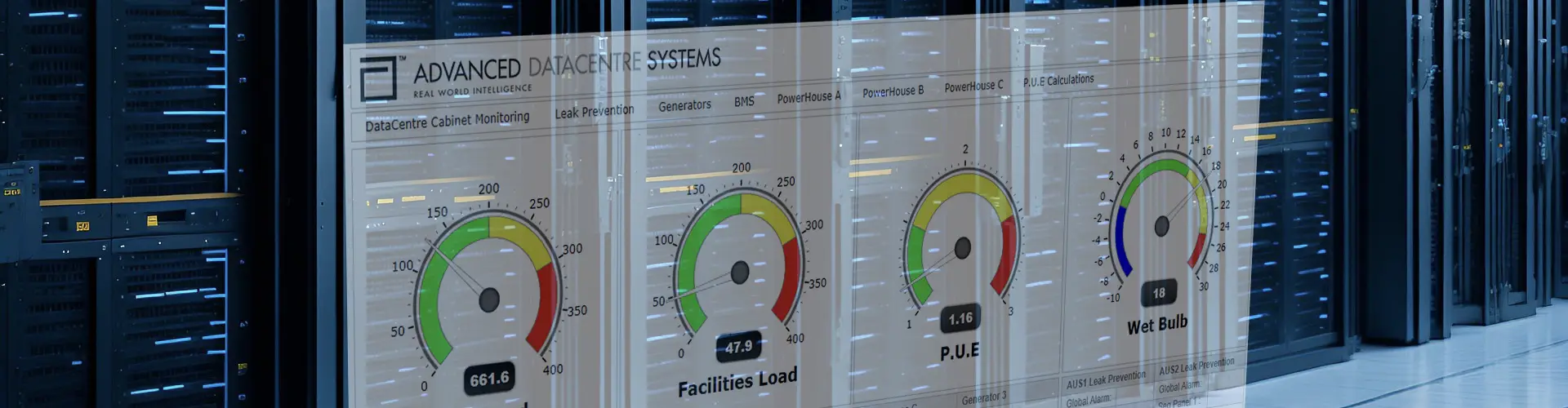
The Power of Vendor-Neutral DCIM: Why Sensorium™ Stands Out
When evaluating DCIM software, one of the biggest pitfalls is vendor lock-in. Many legacy DCIM platforms are built by major hardware manufacturers that prioritise compatibility with their own branded UPS, PDU, or cooling equipment. Consequently, leaving gaps when monitoring third-party hardware.
In contrast, Sensorium™ DCIM is built from the ground up on a vendor-neutral, open-architecture philosophy. Rather than restricting your hardware choices, Sensorium™ gives you complete operational freedom:
- Universal Hardware Integration: Firstly, Sensorium™ communicates seamlessly with multi-vendor ecosystems. Whether your white space uses Schneider Electric racks, Vertiv cooling, APC power distribution or third-party sensors.
- Future-Proof Procurement: Secondly, a hardware-agnostic platform frees you from single-vendor roadmaps and pricing. Instead, you can select best-in-class equipment for every refresh cycle knowing your DCIM will integrate it effortlessly.
- A Single Source of Truth: Furthermore, Sensorium™ eliminates the frustration of juggling multiple manufacturer dashboards. Consequently, it consolidates power, cooling, environmental, and rack security metrics into one intuitive interface.
Beyond broad compatibility Sensorium™ delivers rack-level precision. Instead of merely flagging a temperature rise across an entire data hall, it pinpoints the exact rack and sensor breaching its threshold. Furthermore, empowering you team to shift from reactive troubleshooting to precise management.
Conclusion
Data Centre Infrastructure Management (DCIM) has evolved from a nice-to-have utility into the central nervous system of modern data centre operations.
Rather than reacting to emergencies after performance degrades, leading operators rely on unified, data-driven intelligence to prevent problems before they start. By combining real-time visibility, disciplined capacity planning, and vendor-neutral flexibility, DCIM ensures your facility remains efficient, resilient, and ready for next-generation workloads.
Frequently Asked Questions (FAQs)
A Building Management System (BMS) monitors and controls facility-wide mechanical and electrical infrastructure, such as chillers, generators, lighting, and HVAC plant equipment. In contrast, DCIM software focuses on the white space—tracking rack-level power, server intake temperatures, IT asset inventory, network connectivity, and capacity planning. Together, integrating BMS and DCIM provides complete visibility from the utility feed down to the individual server rack.
DCIM continuously measures total facility power alongside granular IT equipment load, calculating real-time PUE automatically. By identifying overcooled zones, airflow bypass, and idle “zombie” servers, DCIM enables operators to safely raise cold-aisle temperature set points and eliminate wasted cooling energy—directly lowering PUE and electricity costs.
Vendor-neutral (or hardware-agnostic) DCIM supports open communication protocols, allowing it to monitor devices from any manufacturer. This prevents vendor lock-in, lets you integrate legacy equipment alongside new hardware, and consolidates multi-vendor data centres into a single management interface.
Yes. Modern DCIM platforms integrate directly with electronic rack locks and access control hardware—such as the iAccess Controller. This allows operators to manage cabinet permissions remotely, log audit trails of who opened specific racks, and receive instant alerts if a door is forced open or left unlatched.