

Data centre teams depend on alarms to safeguard availability, equipment, and service continuity. They must quickly detect temperature fluctuations, power events, humidity changes, access incidents, and device failures.
However, more alerts do not always mean better protection.
When operators receive a constant stream of notifications—including low-level warnings that require no immediate action—they struggle to identify the alerts that genuinely matter. This phenomenon is called alarm fatigue.
Alarm fatigue desensitises operators to notifications, causes them to delay investigations, or makes them miss early warning signs of developing issues. In data centres, where even minor problems can escalate into downtime, this creates significant operational risk.
The solution is not simply to reduce the number of alarms. Instead, data centre operators need intelligent alarm management that assigns the right level of importance, context, and escalation path to every alert.
What Is Alarm Fatigue?
Alarm fatigue happens when operators receive a constant flood of alerts, warnings, and notifications. These can come from environmental monitoring systems, PDUs, UPSs and other essential IT equipment.
When these alerts look the same, repeat endlessly, or don’t demand immediate action, teams struggle to separate everyday events from genuine threats.
In a data centre, alarm fatigue typically stems from:
- Repeated low-level environmental alerts
- Multiple device notifications coming from different monitoring systems
- Alerts that fail to establish clear priority levels
- Poorly configured thresholds that trigger too many warnings
- Warnings that lack connection to the broader operational picture
- Teams receiving notifications without knowing whether an issue stands alone or connects to a larger pattern
One warning may seem harmless. However, when dozens of notifications arrive daily, even critical alerts disappear into the background noise.
This leads to a dangerous outcome: teams start to ignore, postpone, or dismiss alerts that actually require investigation.
Why Alarm Fatigue Is Dangerous in Data Centres
Data centres built for resilience, availability, and proactive risk management face a significant challenge: alarm fatigue. When operators receive too many alerts, the very system designed to protect them starts working against them.
Early Warning Signs Go Unnoticed
Major incidents rarely appear without warning. A gradual temperature increase, recurring humidity warnings, or a pattern of power-related alerts often signal a developing problem before any outage occurs.
When teams ignore low-level alarms because they’re drowning in noise, these early warnings disappear into the background.
Trust in Monitoring Systems Erodes
A reliable monitoring platform should direct attention where it matters. When false or low-priority alerts flood the system, operators start treating all notifications as background noise. Over time, this habit weakens confidence in the monitoring tools—even when genuine critical issues arise.
Serious Incidents Lose Priority
Not every alert demands the same response. A warning about a potential future problem shouldn’t consume resources the same way an active system failure does. Without proper prioritisation, operators can waste precious time on minor notifications while genuine emergencies wait for response.
Why Minor Alerts Still Matter
Reducing alarm fatigue does not mean ignoring low level alerts.
A single warning often requires no immediate action, but when several appear in the same location they can point to a larger problem.
For example, one environmental alert from a single rack may simply reflect a temporary, local change. However, if several racks in the same cold aisle, row, or zone repeatedly raise similar alerts, they may signal an emerging cooling, airflow, or containment issue.
The key is that teams should not have to manually correlate these events across different systems, devices, and locations. Intelligent alarm escalation solves this by automatically elevating the right alerts based on context.
How Sensorium Helps Reduce Alarm Fatigue
Sensorium gives data centre teams a clearer, more actionable view of operations. Instead of drowning in a sea of notifications, it helps you focus on what actually matters—distinguishing between issues that need instant response, those requiring investigation, and those worth keeping an eye on.
Clear Priority Alert Levels
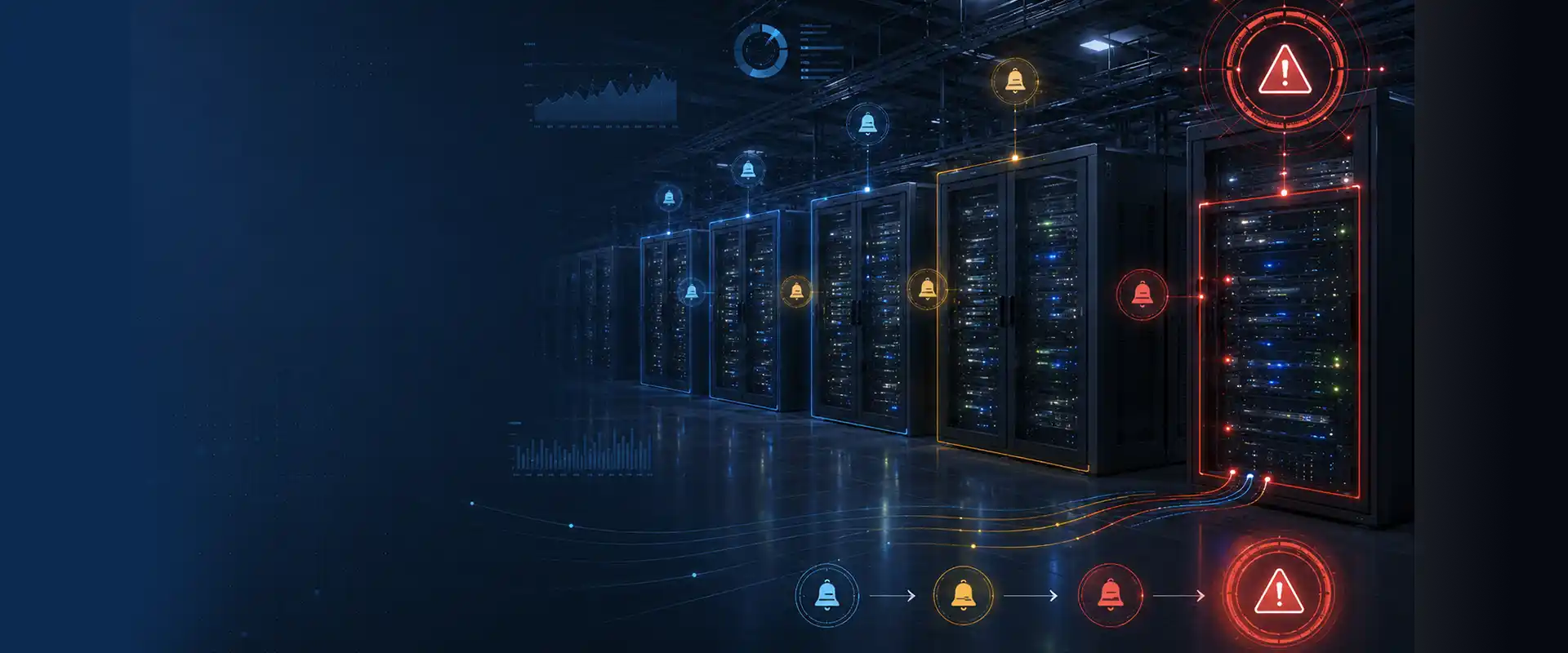
Sensorium categorises alerts into three priority levels, so your team immediately understands how serious each situation is.
- Priority 1 (Critical) – These are your highest-severity alerts. They signal problems that threaten operational resilience, availability, or equipment performance and demand immediate action.
- Priority 2 (Warning) – These issues need timely investigation or resolution, following your organisation’s established procedures.
- Priority 3 (Notice) – These serve as early warnings. Alone, they may not pose an immediate threat, but they can signal conditions that could develop into larger problems if ignored.
This system ensures that genuine emergencies stand out while preventing alarm fatigue from minor issues.
Zone-Based Monitoring Provides Context
Sensorium lets you define zones that mirror your data centre’s physical layout—rooms, rows, cold aisles, containment zones, or rack groups. Monitoring alerts within these zones reveals whether an event is isolated or part of a broader pattern.
Rather than seeing several disconnected minor alerts, operators can recognise they occur in the same area and may be linked. This context transforms raw data into meaningful insight.
Intelligent Escalation Catches Emerging Risks
Sensorium combats alarm fatigue through intelligent escalation. A single Priority 3 warning might not warrant urgent attention. However, when multiple minor alerts cluster within the same zone, Sensorium automatically escalates to a higher priority.
This means developing issues won’t slip through the cracks simply because each individual event seems minor. For example, several low-level temperature or environmental monitoring warnings in one zone could point to a cooling problem, airflow restriction, or changing conditions. Instead of relying on an operator to manually spot the trend, Sensorium elevates the situation and prompts investigation.
The result? A proactive approach to alarm management that keeps your team ahead of potential problems.
From Alarm Noise to Actionable Insight
Intelligent alarming doesn’t aim to silence alerts; it aims to make them truly useful.
Sensorium empowers data centre teams to move away from a reactive mode—where staff must respond to every single event—and instead adopt a smarter approach that prioritises alerts by severity, location, and patterns.
This enables teams to:
- Focus on the alerts that carry the highest operational risk
- Spot emerging issues before they become critical
- Cut down on unnecessary alarm noise
- Accelerate response times
- Give low level warnings the context they need
- Ensure critical events never get missed
The capability is especially valuable in complex environments where monitoring data streams in from multiple systems, devices, and locations.
Best Practice for Preventing Alarm Fatigue
While technology plays a vital role in reducing alarm fatigue, organisations must also regularly evaluate their alarm strategies to ensure effectiveness.
Data centre operators should take these key actions:
- Set thresholds that reflect the actual operating conditions
- Assign clear priority levels to each type of event
- Review low-level alerts that occur repeatedly
- Create zones that match the physical layout of the facility
- Define when multiple minor alerts should trigger escalation
- Ensure teams understand how to respond to Priority 1, 2, and 3 alerts
- Test alarm escalation processes as part of operational resilience planning
The goal: Every alert should serve a clear purpose, giving teams the right information at the right time.
Conclusion
Alarm fatigue is a growing risk for data centre operators. When teams receive too many alerts, they can miss critical warnings, delay response times and weaken operational resilience.
The solution is not to silence alarms – it’s to make them smarter. Sensorium uses clear priority levels, zone based monitoring and automated escalation of minor alerts to help teams spot developing issues early. This cuts unnecessary alarm noise while ensuring that serious and emerging threats receive immediate attention.
By turning isolated alerts into actionable operational insight, Sensorium enables data centre teams to make faster, more informed decisions and protect uptime more effectively.
To learn more, visit the Sensorium DCIM page.