

CO2 Monitoring in Data Centres: What It Is, Why It Matters & Key Benefits
Introduction to Carbon Dioxide Monitoring in Data Centre Environments
Data centres must rely on CO2 monitoring to maintain a competitive operational edge. Because sustainability targets are rising, tracking carbon levels has become a necessity rather than a choice.
Furthermore, this process boosts energy efficiency and simplifies ESG reporting. It also ensures a safer work environment for on-site staff. Consequently, these insights provide a clear picture of both environmental impact and facility health.
This guide outlines the basics of carbon dioxide monitoring and explains why integrating CO2 measurements into your facility’s environmental monitoring program is essential. Finally, we show how the CO2 iSensor from Advanced Datacentre Systems adds extra value to your operations.
This guide will cover:
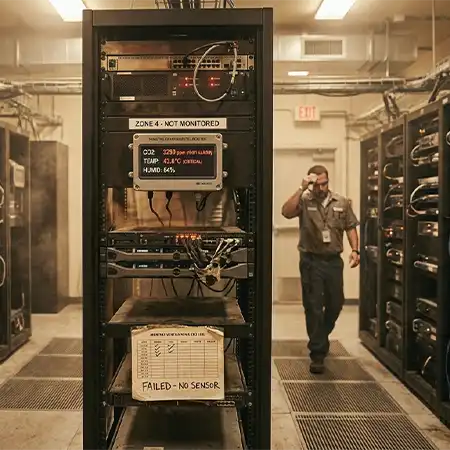
What is CO2 Monitoring in Data Centres?
Carbon dioxide (CO2) monitoring in data centres involves measuring and tracking CO2 levels in real time, typically expressed in parts per million (ppm).
CO2 sensors are deployed across key areas such as:
- Data halls (white space)
- Plant rooms and cooling infrastructure areas
- Staff-occupied zones
CO2 monitoring in data centres serves two distinct, crucial purposes:
- Environmental & Sustainability: It precisely tracks carbon emissions, supporting vital ESG reporting.
- Indoor Air Quality (IAQ): This ensures adequate ventilation and maintains safe working conditions for personnel.
Data centres are growing, and new rules are getting stricter. Consequently, companies must prioritise these two tasks. When operators link CO2 tracking with environmental monitoring, they see a more accurate picture of their impact. In addition, the system sends real-time data straight to DCIM software for easy management.

Why CO2 Monitoring is Important in Data Centres
Tracking carbon dioxide levels helps data centres link their energy use to their green targets. By monitoring CO2 levels, managers learn how well their airflow systems function. Consequently, they can reduce their total carbon footprint more effectively. Today, data centres face more pressure than ever to be sustainable. CO2 tracking is now essential. Ultimately, it helps managers make smarter decisions to improve their operations.
Supporting Sustainability & Net Zero Targets
Data centres consume vast amounts of energy. Their electricity usage and cooling systems drive significant carbon emissions. Consequently, these facilities already account for a substantial percentage of global CO2 output. AI demand, for example, will rapidly accelerate this growth.
Operators, therefore, benefit greatly from diligent CO2 monitoring. This practice enables them to:
- Clearly understand their true environmental impact.
- Accurately track Scope 1, 2, and 3 emissions.
- Comply with regulatory and ESG reporting mandates.
- Demonstrate tangible progress toward carbon neutrality goals.
Consequently, carbon dioxide has emerged as a crucial performance indicator for sustainable data centre operations.
Improving Energy Efficiency
Energy usage and carbon emissions move in tandem. Because of this connection, facility managers gain a significant advantage when they track CO2 levels alongside their power and cooling systems. This integrated approach helps operators spot exactly where energy goes to waste.
Specifically, real-time monitoring provides several clear benefits:
- Operators pinpoint weak spotsin cooling or airflow that they might otherwise miss.
- Teams adjust ventilation speedsinstantly to match the actual needs of the room.
- Systems stop burning unnecessary power, which prevents energy drain.
Furthermore, these environmental improvements lead to direct financial gains. When a facility cuts its carbon output, it almost always reduces its monthly utility bills. Consequently, tracking carbon dioxide serves as a powerful dual-purpose tool. It protects the planet while simultaneously strengthening the company’s bottom line.
Ensuring Effective Ventilation & Air Quality
Monitoring carbon dioxide (CO2) levels provides a clear and immediate look into the health of your ventilation system. When these levels climb, they act as a warning sign that the building is not “breathing” correctly. High CO2 readings typically highlight several underlying problems:
- Weak Airflow: The ventilation system may lack the power to move air effectively through the building.
- Stagnant Pockets: Stale air often traps itself in enclosed corners or crowded rooms, creating uncomfortable dead zones.
- System Inefficiency: Obstructed vents or outdated fans often fail to replace old air with fresh, outdoor air.
- Staff Vulnerability: Rising gas levels create an invisible risk to the health and safety of everyone in the room.
Furthermore, poor air quality does more than just cause discomfort; it directly impairs the way the brain functions. Research confirms that breathing in too much CO2 dulls mental sharpness and slows down reaction times. Consequently, employees often suffer from heavy fatigue, persistent headaches, and a lack of concentration.
These issues become even more dangerous in mission-critical environments. For example, facilities teams in data centres must manage complex systems where even minor human errors can lead to massive outages. Therefore, keeping the air fresh is not just a matter of comfort. It is a vital strategy to ensure both staff safety and high-level productivity. By prioritising air quality, managers protect their most valuable assets: the people running the machines.
Enhancing Operational Resilience
Keeping your systems running smoothly starts with consistent environmental monitoring. Most managers focus primarily on temperature and humidity monitoring. These factors are important, but they do not tell the whole story. You can gain much deeper insights into your facility by adding CO2 monitoring to your strategy.
This extra layer of data helps you stay ahead of potential problems in the following ways:
- It identifies hidden failures in your airflow or containment systems.
- It provides the necessary data to improve your predictive maintenance schedules.
- It helps you spot dangerous trends before they stress or damage your hardware.
Consequently, a more comprehensive monitoring plan lowers the risk of sudden outages. It also protects your budget from the high costs of emergency repairs and service interruptions. In short, tracking more than just heat ensures your operations remain stable and efficient.
Additional Benefits of Carbon Dioxide Monitoring
Monitoring carbon dioxide levels offers several strategic advantages that extend far beyond simply meeting legal rules or saving energy. When you track these emissions, you unlock deeper value for your entire operation. This technology provides the tools you need to optimise your facility and prove your commitment to the planet.
Consider these additional benefits of a robust carbon dioxide monitoring system:
- Smarter Business Choices: CO2 sensors provide a clear window into how your facility performs. You can use this real-time data to make informed decisions that boost operational success.
- Better Sustainability Reports: Investors and partners now look for hard evidence of your green efforts. Monitoring gives you exact numbers for your Environmental, Social, and Governance (ESG) reports so you can show real progress.
- Protection Against New Laws: Environmental regulations will likely become much stricter in the coming years. By tracking your output now, you ensure your business stays ahead of these future legal requirements.
- Support for Eco-Friendly Growth: Most modern data centres want to reduce their impact on the earth. This technology acts as a vital pillar for any strategy that aims to create a “green” data centre.
Furthermore, a strong focus on sustainability now helps you stand out from your competitors. Because the market is changing quickly, carbon dioxide monitoring is no longer just a luxury. It has become a vital piece of infrastructure for any forward-thinking company.

Why Choose the CO2 iSensor from Advanced Datacentre Systems?
To maximise the benefits of CO2 monitoring, you need high-quality sensors that integrate perfectly into your system. Advanced Datacentre Systems built the CO2 iSensor specifically for data centre environments. It works alongside the iSensor Controller to provide these essential advantages:
- Built for Data Centers:We designed this sensor to thrive in mission-critical facilities. It delivers data that works perfectly with your existing monitoring systems.
- Real-Time Accuracy:The sensor provides precise carbon dioxide measurements for better decision-making. Additionally, it sends instant alerts if conditions cross your chosen safety limits.
- Complete Integration:The device connects seamlessly with the iSensor Controller and Sensorium DCIM platform. Consequently, you gain a single, clear view of all your environmental data.
- Health Risk Protection:The system uses the Wells-Riley model to track airborne infection risks. Therefore, it helps you keep shared indoor spaces safe from diseases like COVID-19.
- ESG and Compliance Support:It generates the reliable data you need for sustainability reporting. In turn, these insights help you prove your carbon reduction progress.
- Future-Proof Scaling: You can easily deploy the system across one site or many. Furthermore, the iSensor adapts to meet evolving laws and operational demands.
Conclusion
As data centres continue to grow in scale and complexity, CO2 monitoring is becoming a critical component of modern environmental monitoring strategies.
It enables operators to:
- Reduce environmental impact
- Improve efficiency and reduce costs
- Maintain safe and productive environments
- Strengthen resilience and uptime
By combining accurate sensing with intelligent monitoring, solutions like the CO2 iSensor from Advanced Datacentre Systems help turn sustainability goals into measurable outcomes.
For a broader overview on environmental monitoring in data centres and reducing risks, see our Essential Guide to Environmental Monitoring in Data Centres.