

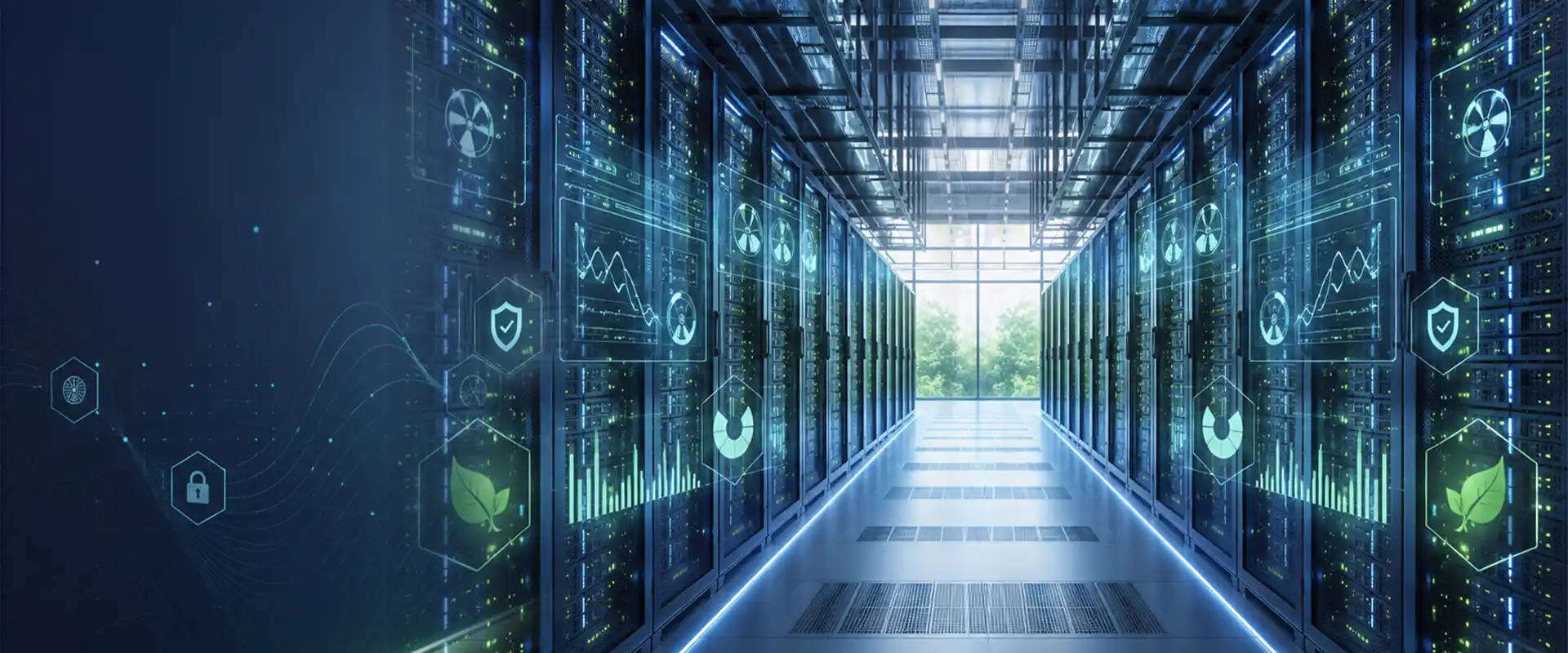
How DCIM Enables Sustainable Data Centre Operations
Data centre sustainability has moved beyond a compliance checkbox or a distant goal – it’s now a day to day operational necessity.
As digital services expand, operators must cut energy use, make better use of existing capacity and demonstrate measurable environmental progress. The snag: critical data often lives in isolated systems – power, cooling, environmental monitoring, and security – so teams can’t see the full picture.
That’s where Data Centre Infrastructure Management (DCIM) steps in.
A well-designed DCIM platform pulls together data from every corner of the facility, transforms it into clear, actionable insight, and delivers real time visibility. With that insight, staff can make fast, informed decisions that reduce waste while preserving reliability, uptime, and security.
What Does Data Centre Sustainability Mean in Practice?
True data centre sustainability extends far beyond buying renewable energy or publishing ESG reports.
For operational teams, sustainability plays out every single day—in how efficiently they use power, cooling, space, and equipment. It means cutting out waste, trimming unnecessary consumption, and squeezing more life out of existing infrastructure.
A sustainable data centre operation should:
- Reduce unnecessary energy use
- Optimise cooling without creating environmental hazards
- Maximise power, space, and rack capacity
- Delay or avoid premature infrastructure upgrades
- Strengthen maintenance planning and asset lifecycle management
- Generate solid evidence of operational improvements
To achieve these goals, occasional meter readings and manual spreadsheet updates won’t cut it. Teams need continuous, reliable data that gives them a real-time view of everything happening across the facility.
Why Visibility Is the Foundation of Data Centre Sustainability
Data centres overflow with data yet struggle to see the big picture, down to limited visibility.
Power readings live in one system, cooling data in another, and environmental sensors, BMS platforms, rack access logs, and asset information each float around in separate silos. This fragmentation hides inefficiencies and makes it nearly impossible to trace how one problem cascades into another.
Consider a spike in cooling energy. Multiple culprits could be to blame—poor airflow, a failing CRAC unit, higher rack density, or a localised hot spot. Without a unified view of power, temperature, and environmental conditions, operators only glimpse the symptom, never the root cause.
DCIM solves this by pulling all critical infrastructure data into a single platform. Teams gain a clear, integrated picture of how power, cooling, capacity, environmental conditions, and physical activity interact across the facility.
This holistic visibility lays the groundwork for real data centre sustainability improvements.
How DCIM Supports Sustainable Data Centre Operations
Turn real-time power data into energy-saving action
The first step toward sustainability is understanding exactly where energy goes.
DCIM gives operators a complete view odf power consumption across the entire data centre—from the incoming utility supply and UPS systems, through PDUs and individual racks, all the way to connected equipment. This visibility makes it easy to spot unusual consumption patterns, underutilised infrastructure, and unexpected increases in energy use.
Instead of relying on assumptions or historical estimates, teams can work with real operational data. This enables smarter decisions about:
- Identifying racks with unused power capacity
- Detecting unexpected power draw before it escalates
- Understanding how new equipment impacts facility demand
- Avoiding unnecessary infrastructure expansion
- Monitoring energy trends over time
With actual power data, operators can maximise their existing infrastructure and eliminate the waste that comes from overprovisioning.
Improve cooling efficiency with environmental insight
In any data centre, cooling typically ranks among the top operational energy expenses. However, improving cooling efficiency and reducing energy costs should never compromise the reliability of your IT equipment.
The real objective isn’t to blast the room with more cold air. Instead, it’s about delivering cooling precisely where needed, exactly when needed, and in the right amounts.
This is where DCIM makes the difference. By merging environmental data with operational insights, DCIM platforms create a complete picture of conditions throughout your facility. When integrated with environmental monitoring devices like the iSensor Controller, platforms like Sensorium DCIM delivers real-time visibility into temperature, humidity, and changing conditions across every rack, row, and room.
With this intelligence, operators can pinpoint specific problems such as:
- Localised hot spots
- Poor airflow management
- Hot and cold air mixing
- Overcooled areas
- Temperature fluctuations tied to equipment load
- Cooling systems working harder than necessary
Armed with this data, teams can address the root cause of inefficiency rather than applying blanket, expensive solutions across the entire data hall.
For instance, if one section overheats while nearby racks stay cooled, the fix might involve better airflow containment, blanking panels, rack layout adjustments, or targeted cooling adjustments. DCIM provides the evidence you need to make these decisions with confidence.
Measure and improve PUE performance
Power Usage Effectiveness (PUE) remains a valuable metric for measuring data centre efficiency.
However, its true power emerges when teams track it consistently as part of daily operations rather than calculating it occasionally for compliance reports.
DCIM platforms make it simple to monitor the relationship between total facility energy and IT equipment energy over time. This ongoing visibility helps teams spot trends, dig into anomalies, and confirm whether efficiency projects deliver their intended benefits.
For example, operators can use DCIM data to evaluate whether cooling upgrades, airflow adjustments, or infrastructure improvements have cut non-IT energy consumption. They can also identify seasonal patterns, load shifts, and periods when efficiency begins to slip.
Ultimately, the goal isn’t to chase a single PUE number in isolation. The goal is to understand what drives energy use and make practical improvements that strengthen resilience while reducing waste.
Use capacity more intelligently
Sustainable data centre operations mean more than cutting energy use today. They also require preventing waste tomorrow.
When operators lack accurate capacity data, they may assume their racks, power systems, or cooling infrastructure are near their limits when plenty of usable space remains. This misconception often triggers premature upgrades, unnecessary equipment purchases, or avoidable facility expansions.
DCIM solutions give teams a transparent view of available power, space, cooling, and connectivity capacity. With this insight, planners can deploy new equipment smarter and extend the life of existing infrastructure.
Strong capacity planning drives sustainability by:
- Delaying unnecessary expansion projects
- Reducing the embodied carbon from new infrastructure
- Improving rack utilisation
- Preventing stranded power and cooling capacity
- Enabling more accurate forecasting for future growth
The outcome: a more efficient data centre that extracts greater value from the assets it already owns.
Move from reactive maintenance to informed action
Reactive maintenance is costly, disruptive, and drains resources.
When technicians wait until temperatures climb, equipment fails, or alarms sound, they must act fast with little background information. That often means unnecessary site visits, rushed decisions, and the same problem re appearing shortly after the fix.
DCIM enables a proactive strategy. It logs historical trends, correlates alarms, and flags any performance shifts, giving teams early warning of emerging issues.
With that warning, operators can schedule targeted maintenance, investigate recurring problems, and prioritise work based on solid evidence rather than guesswork.
Over time, this approach reduces avoidable downtime, improves equipment reliability, and supports a more sustainable way to keep critical infrastructure running.
Bringing Sensorium, iSensor and iAccess Together
Sensorium DCIM acts as the central platform for sustainable data centre operations. It brings together data from power, cooling, environmental monitoring, assets, and physical security systems into one unified platform.
Combine Sensorium with iSensor environmental monitoring, and operators gain deeper insight into the factors that influence cooling performance, equipment reliability, and energy efficiency. Real-time temperature and humidity data help teams catch environmental risks early and make smarter cooling decisions.
iAccess rack access control also plays a supporting role. While it doesn’t directly save energy, it strengthens the governance and accountability that sustainable operations need. iAccess tracks who accessed each rack, when they accessed it, and what activity occurred. This creates clear operational records for maintenance, equipment changes, and asset management.
This capability proves especially valuable in complex environments where multiple teams, contractors, or tenants share responsibility for the infrastructure.
Together, Sensorium, iSensor, and iAccess create a more complete operational picture:
- Sensorium centralises infrastructure data and transforms it into actionable insight
- iSensor delivers real-time environmental intelligence to support cooling and reliability decisions
- iAccess provides rack-level accountability and a clear audit trail for physical activity
This connected approach lets operators manage sustainability, resilience, security, and efficiency as part of one coordinated strategy.
Turning Sustainability Targets into Measurable Progress
Real sustainability progress requires measurable metrics—without data, teams cannot track improvement.
DCIM solutions empower operators to set baselines, prioritise actions, monitor gains, and demonstrate results over time. Instead of relying on scattered reports or manual data gathering, teams can build dashboards and alerts that keep sustainability performance visible every day.
A practical approach includes:
- Establishing a baseline for energy use, PUE, cooling performance, and capacity.
- Pinpointing the areas with the biggest improvement potential.
- Using environmental data to investigate hot spots and inefficient cooling.
- Tracking the impact of airflow, cooling, or equipment changes.
- Reviewing trends regularly to spot new risks or opportunities.
- Reporting progress using accurate operational data.
This approach transforms data centre sustainability from a vague goal into a structured, measurable process.
Sustainable Operations Start with Better Data
True data centre sustainability doesn’t come from a single upgrade, dashboard, or policy. It grows through daily operational improvements—the kind you build step by step.
The most effective operators know exactly how their infrastructure performs, where energy waste hides, and which actions deliver the biggest impact. They leverage real-time data to fine-tune cooling systems, balance power usage, maximise capacity, and make decisions that strengthen both efficiency and resilience. This is where DCIM becomes essential.
Sensorium DCIM—paired with iSensor environmental monitoring and iAccess rack-level accountability—gives your team unified visibility. Instead of juggling fragmented information, you can manage sustainability as a core part of daily operations.
The payoff? A data centre that runs more efficiently, stands stronger against disruptions, and lets you track measurable progress over time. You’ll cut waste, control costs, and demonstrate real results to stakeholders.
Discover how Sensorium DCIM can help you improve visibility, drive efficiency and elevate sustainability across your data centre infrastructure.